Gray hair has officially had its glow-up. Nothing looks more confident on a woman over 50 than hair she stopped fighting and started styling. Whether your gray came in early, arrived with menopause, or you finally let go of the box dye last year, the right cut and a little know-how can turn “salt-and-pepper” into showstopper.
No two heads of gray are the same, either. Some of us go steely and metallic, some settle into a warm, soft silver, and others land on a bright, snowy white — and each of those base tones photographs and styles just a little differently, which is exactly why I wanted this roundup to cover so many cuts, lengths, and textures rather than just one “gray hair look.”
In this roundup, I’m sharing 30 of my favorite natural gray hairstyles for women in their 40s, 50s, and 60s and beyond — pixies, bobs, lobs, waves, and updos that flatter every texture and face shape. Go ahead and save this hairstyle for over 50 collection right now, because you’ll want to reference it the next time you’re sitting in the salon chair.
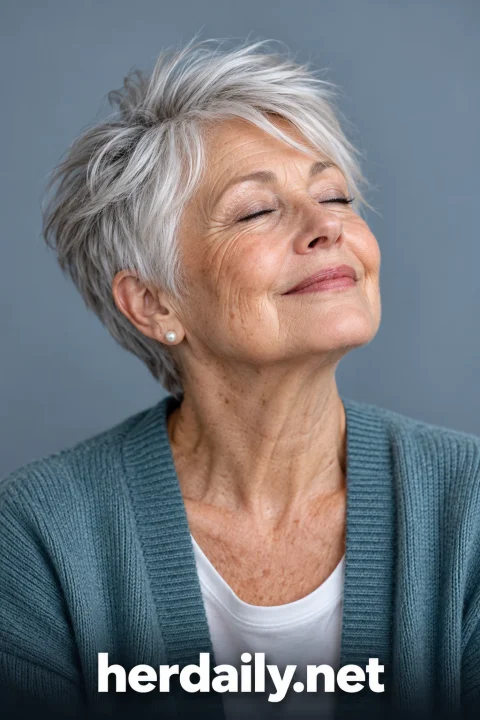
Silver Pixie Crop with Textured Fringe

A cropped pixie with a piece-y, textured fringe is one of the fastest ways to look years younger without touching your natural color. The shorter length lets every silver tone catch the light, and a bit of texturizing paste keeps it looking modern rather than “salon-set.” It’s my go-to recommendation for women in their 50s and 60s who want low-maintenance styling with maximum personality.
Chin-Length Bob in Icy Platinum

If your gray has cooled into a bright, icy platinum, a crisp chin-length bob shows it off beautifully. The blunt line adds density and swing, which helps disguise any thinning at the crown — a common concern after 50. A weekly purple shampoo keeps brassy tones at bay and the platinum looking freshly done.
Long Layered Waves in Soft Silver

Long hair over 50 doesn’t have to mean “no layers” — this soft, wavy silver look proves the opposite. Face-framing layers add movement and keep long gray hair from looking flat or heavy. A loose braid worn overnight is all it takes to wake up to waves like these.
Shoulder-Length Shag with Curtain Bangs

The shag is back, and gray hair is made for it. Feathered layers throughout, paired with soft curtain bangs, add instant volume and a lived-in texture that reads effortlessly cool rather than “trying too hard.” If you love this level of movement, browse more short shaggy haircuts for even lower-maintenance versions of the look.
Salt-and-Pepper Lob (Long Bob)

For women whose gray is coming in as a natural salt-and-pepper blend rather than solid silver, a lob (long bob) is incredibly forgiving. It’s long enough to tuck behind your ears on busy mornings, short enough to feel fresh and current, and it grows out gracefully between trims.
Curly Gray Afro-Textured Crop
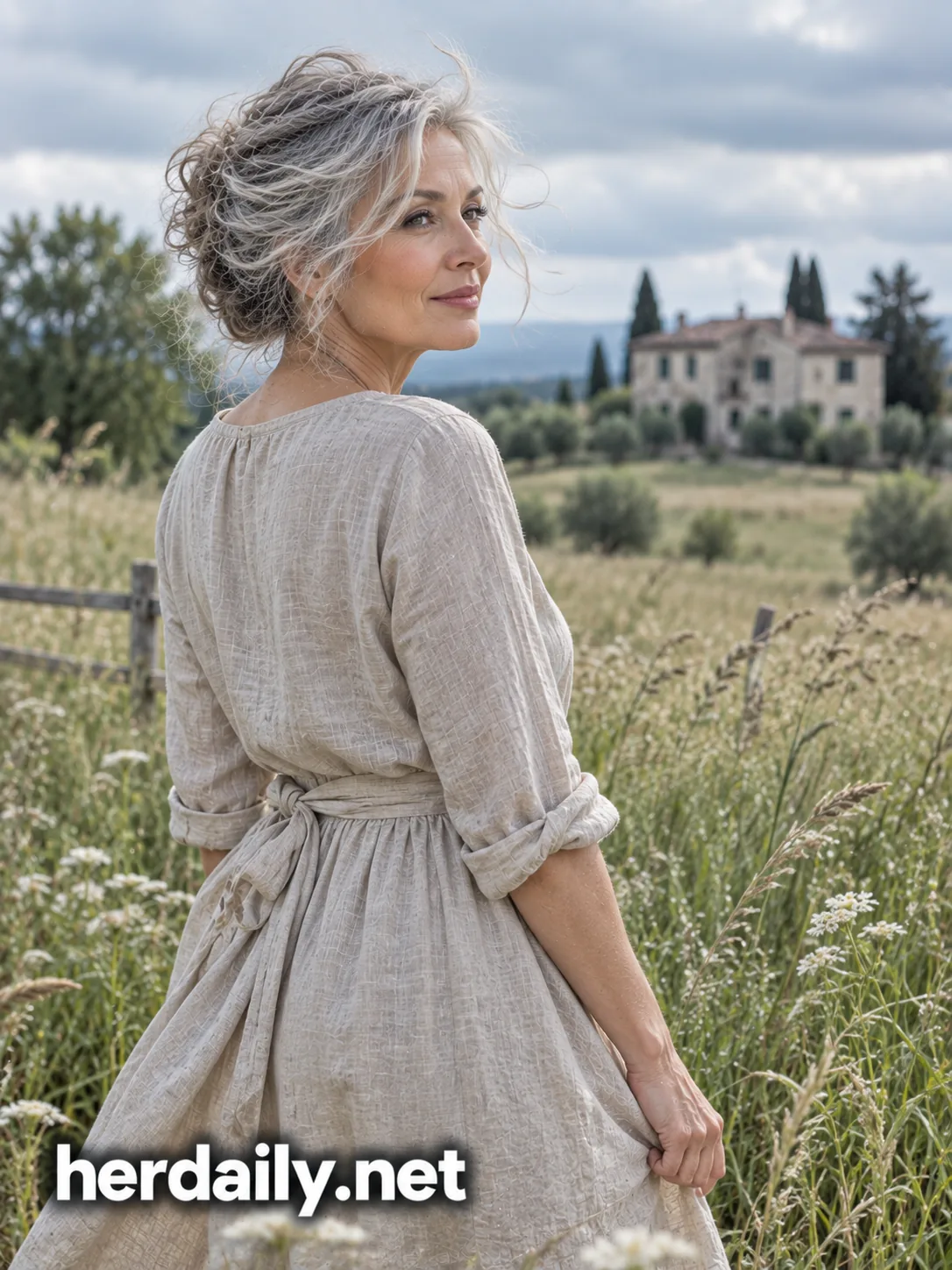
Curly and coily gray hair has a gorgeous natural volume that a well-shaped crop celebrates rather than fights. Keep curls defined with a lightweight curl cream and minimal heat. For more inspiration on cropped, textured lengths, take a look at these black hair short cuts.
Sleek Silver Bob with Side Part

A glass-like, sleek bob with a deep side part is the most “done” look on this list — perfect for client meetings, weddings, or any day you want your gray to look polished and intentional rather than casual.
Feathered Gray Layers for Fine Hair
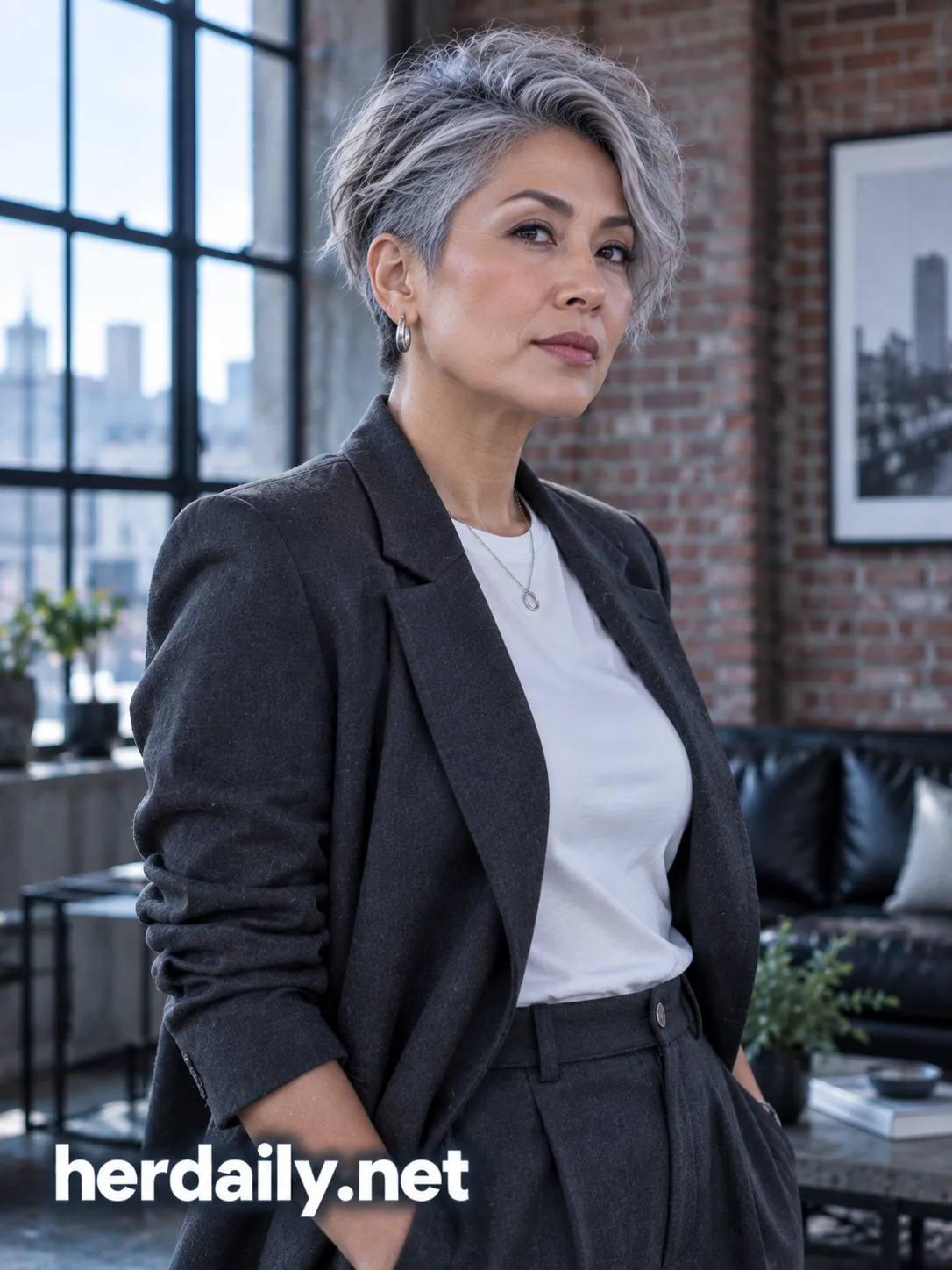
Fine, thinning hair is one of the biggest concerns I hear from women in their 60s, and feathered layers are the fix. Cutting layers at an angle, rather than straight across, tricks the eye into seeing more density and bounce.
Short Tapered Pixie with Undercut

A tapered pixie with a subtle undercut at the nape keeps things cool in humid weather and gives your stylist room to sculpt shape at the crown, where volume matters most. It’s a favorite among my 50-something clients who used to wear their hair long and want a dramatic, but still soft, change.
Wavy Silver Shoulder Bob
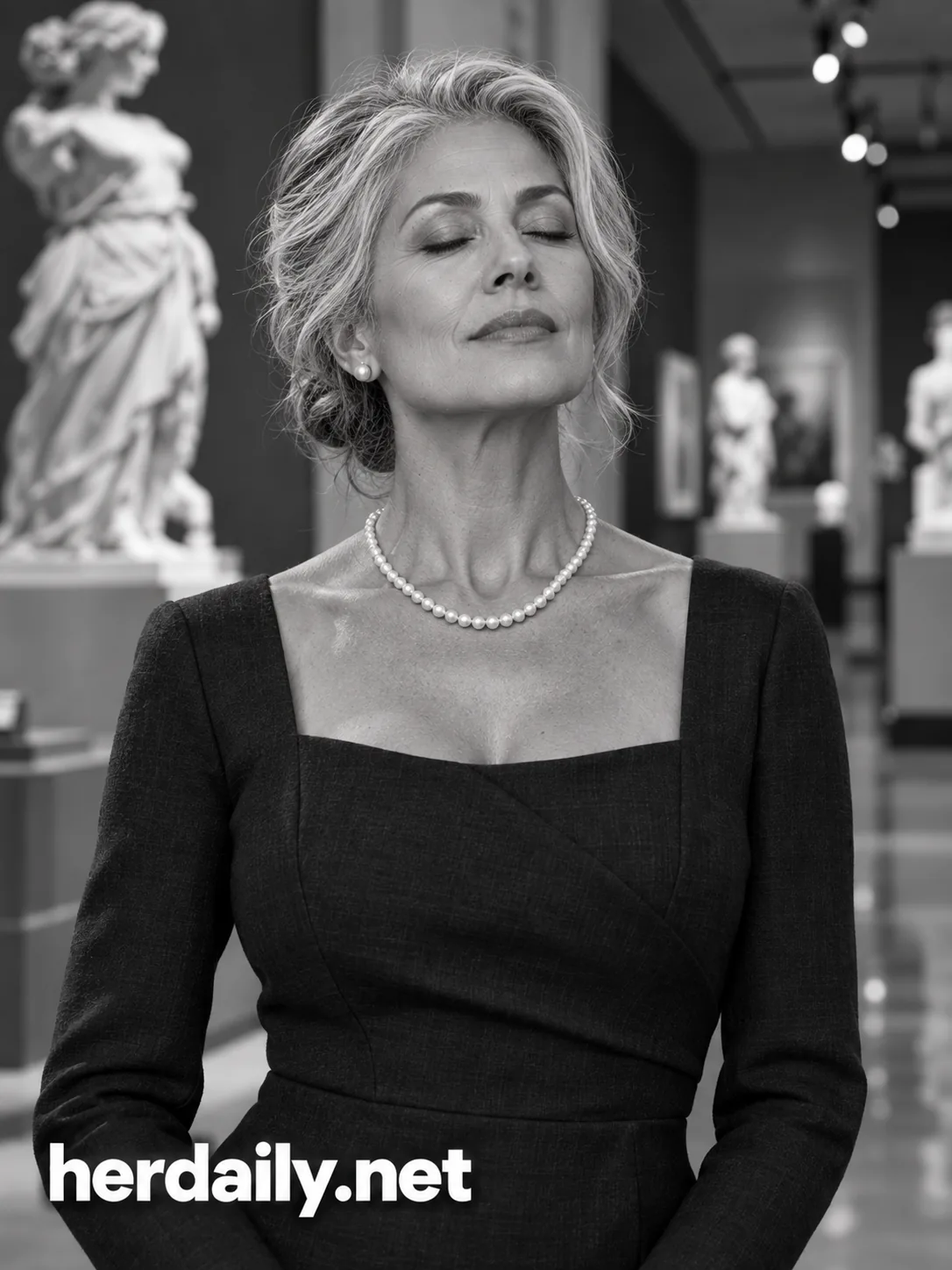
A shoulder-grazing bob with a loose wave is the low-effort, high-reward cut I recommend to almost every new client. Air-dry it with a curl cream, or rough-dry it for a slightly more polished finish — either way, the gray looks completely intentional.
Long Gray Hair with Face-Framing Layers

Yes, you can absolutely keep your hair long after 50 — this face-framing, long layered style is proof. The key is regular trims every 8–10 weeks to keep ends from looking wispy or damaged. For more ways to wear length gracefully, my guide to over 40 long hairstyles has plenty of styling ideas.
Textured Crop with Soft Waves

A textured crop with a soft wave pattern gives you the ease of short hair with a little extra romance. Scrunch in a light mousse while damp and let it air-dry for effortless, second-day-ready texture.
Classic Gray Bob with Blunt Ends
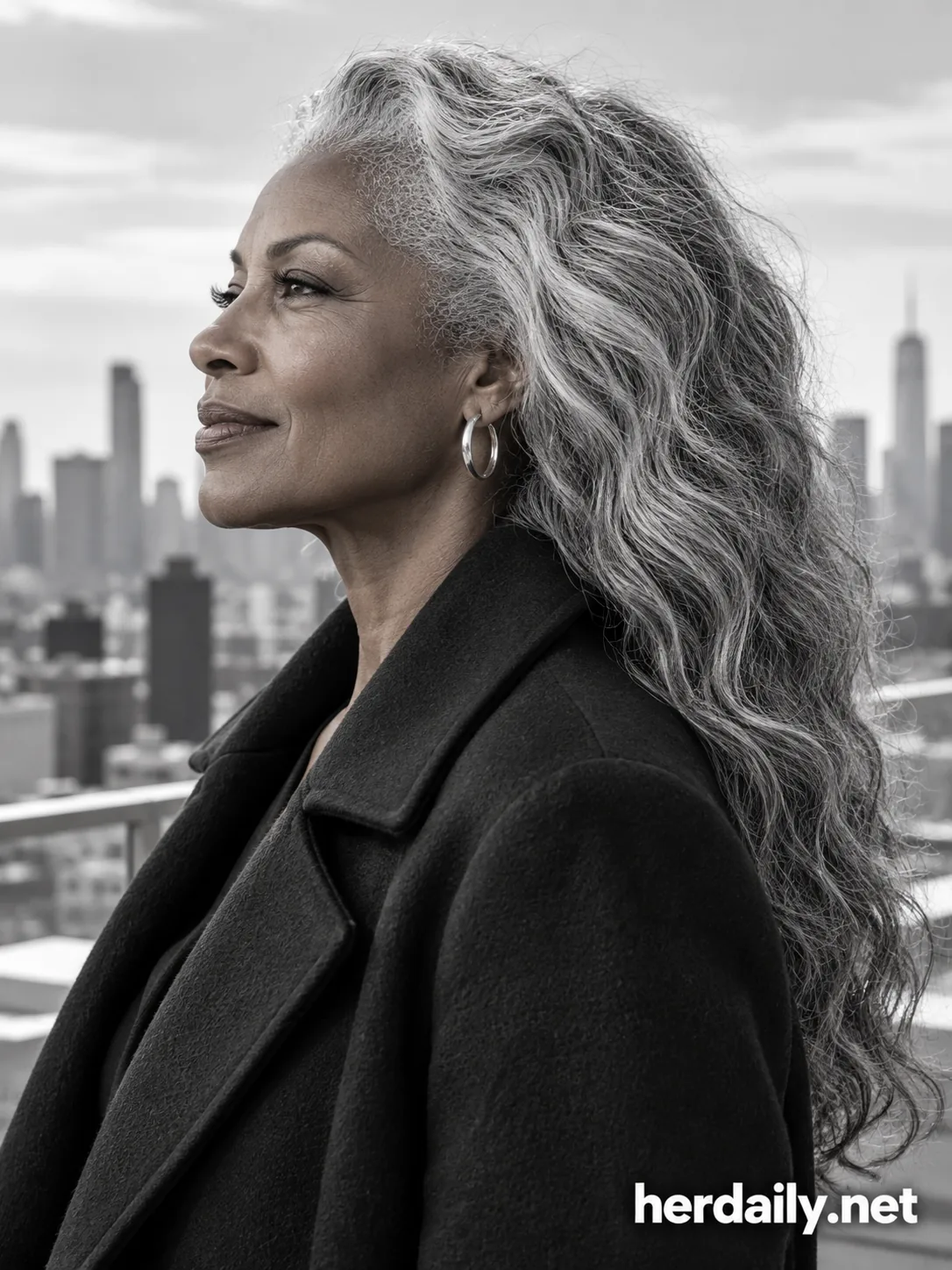
Sometimes the classics really are the classics. A blunt, chin-to-jaw bob in natural gray reads as timeless and confident — no gimmicks required, just a sharp cut and healthy, well-conditioned ends.
Voluminous Silver Curls (Medium Length)

If your natural texture is curly, lean into it. Medium-length curls, cut with plenty of internal layering, create volume that a straight cut simply can’t match, and curly gray hair tends to have a beautiful, dimensional shine.
Asymmetrical Silver Bob

An asymmetrical bob — slightly longer in the front, shorter in the back — adds a modern edge to gray hair and is especially flattering if you carry a little more fullness through the jaw.
Shag Cut with Gray Highlights

Not fully gray yet? A shag cut with strategic silver highlights blended through your natural color is a beautiful way to transition without a jarring line of demarcation. It also disguises regrowth wonderfully between color appointments.
Sleek Straight Silver Lob

Poker-straight and silver, this lob proves that gray hair can look incredibly sleek and luxurious with the right shine serum and a good flat iron on cooler, low-humidity days.
Braided Silver Updo

Braided styles are wonderfully protective for gray hair, which can be more prone to dryness and breakage than pigmented hair. If you love braided texture, these flip-over Fulani braids are another beautiful protective option worth trying.
Soft Layered Pixie for Round Faces
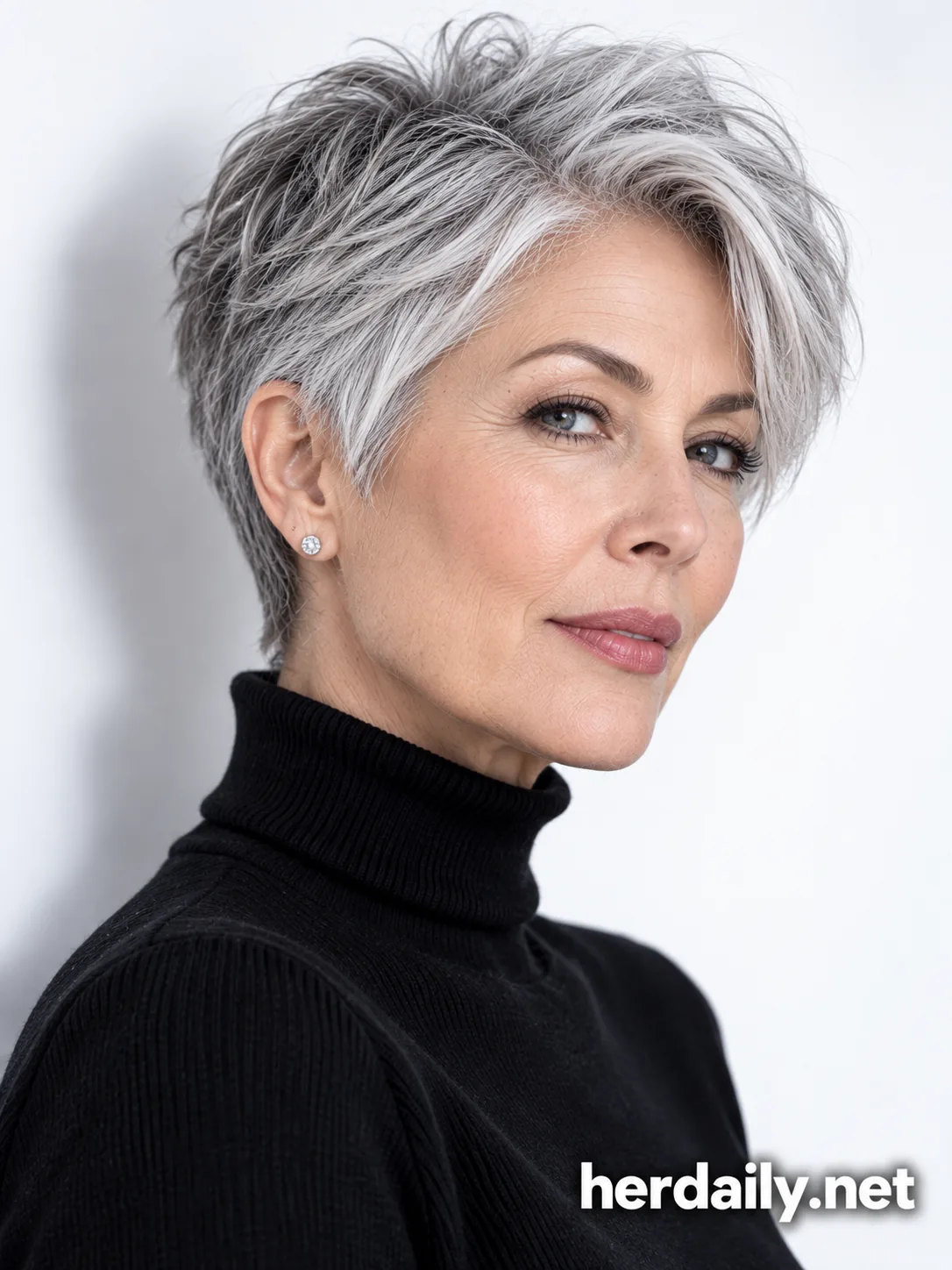
This softly layered pixie, with extra height built into the crown, is one of my top picks for round face shapes because the vertical lift visually elongates the whole face.
Long Wavy Gray Hair with Center Part

A center part with loose waves running the full length of the hair feels bohemian and youthful, proving that gray hair and “boho” are not mutually exclusive.
Cropped Pixie with Side-Swept Bangs

Side-swept bangs soften the strong lines of a cropped pixie and are especially flattering for square or angular face shapes, easing the transition into shorter hair for first-timers.
Chin-Grazing Bob with Soft Curls
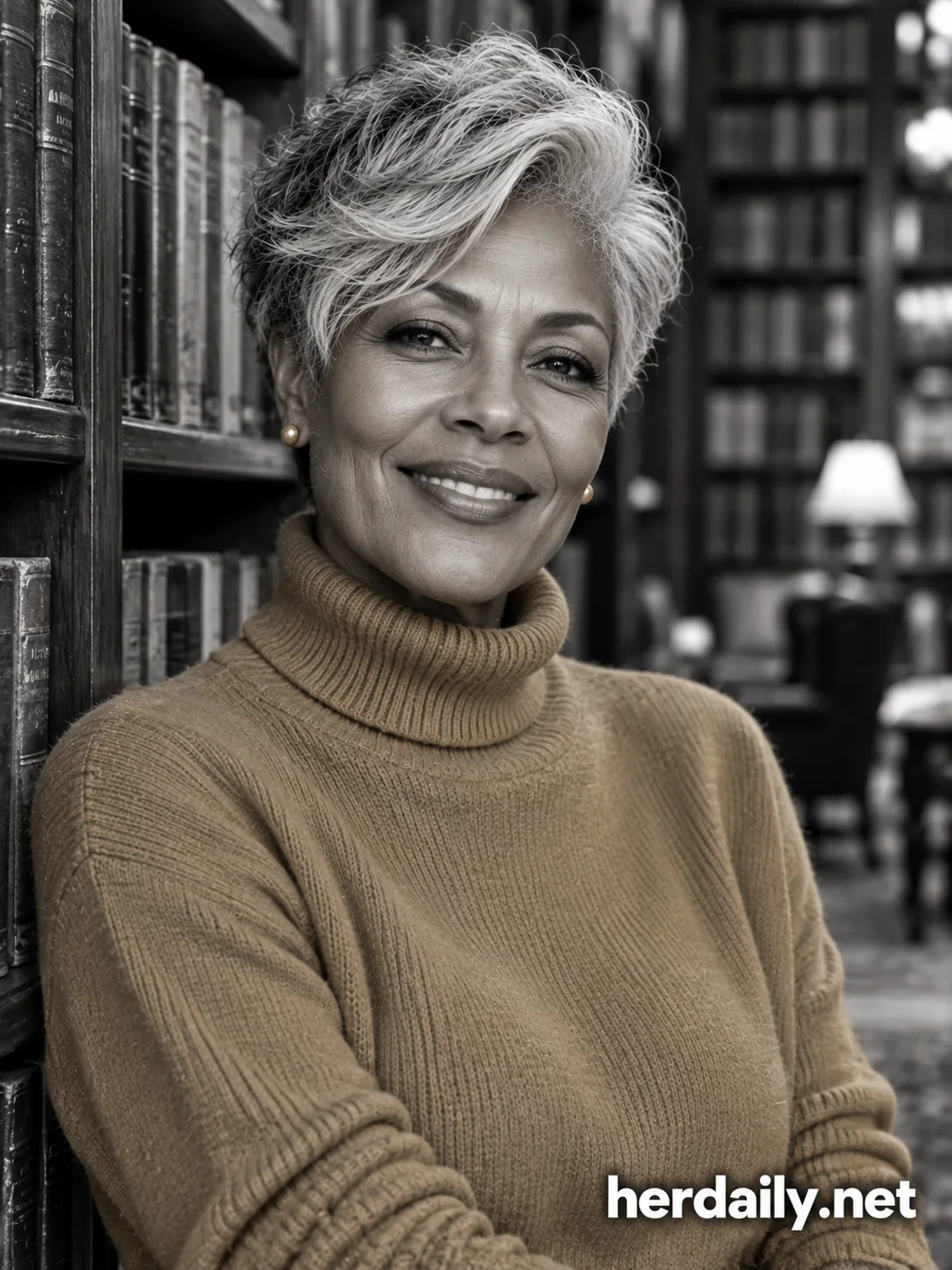
A chin-length bob styled with soft curls, rather than a sleek blowout, adds a romantic, approachable quality to gray hair and works beautifully on naturally wavy textures.
Silver Shag with Wispy Layers

Wispy, feather-light layers throughout a shag cut give the illusion of movement even on second- or third-day hair — ideal for busy women in their 40s and 50s juggling work and family.
Medium-Length Gray Hair with Face-Framing Curls

Medium length is the sweet spot for many women over 60: long enough to pull back on a whim, short enough to dry quickly, and gorgeous with a few loose curls left framing the face.
Textured Pixie Bob (Pixie-Bob Hybrid)

This pixie-bob hybrid — slightly longer than a classic pixie but shorter than a bob — is trending for good reason: it offers styling versatility, from sleek to tousled, in one single cut.
Long Gray Waves with Balayage Accents

A few subtle balayage accents woven through long gray waves add dimension and warmth near the face, a technique many colorists use to soften a stark gray-to-dark contrast.
Classic Short Crop for Straight Hair

For pin-straight hair, a classic short crop stays polished with minimal product and is one of the most forgiving cuts as hair naturally thins with age.
Loose Curly Silver Lob

A loose, curly lob combines the ease of shorter hair with the softness of curls — a beautiful middle ground for anyone who isn’t quite ready to go full pixie.
Layered Bob with Soft Bangs

Soft, side-swept bangs paired with a layered bob camouflage a receding hairline or thinning temples, two changes many women notice in their 50s and 60s. Explore more layered haircuts over 50 if volume and movement are high on your wish list.
Elegant Updo for Special Occasions
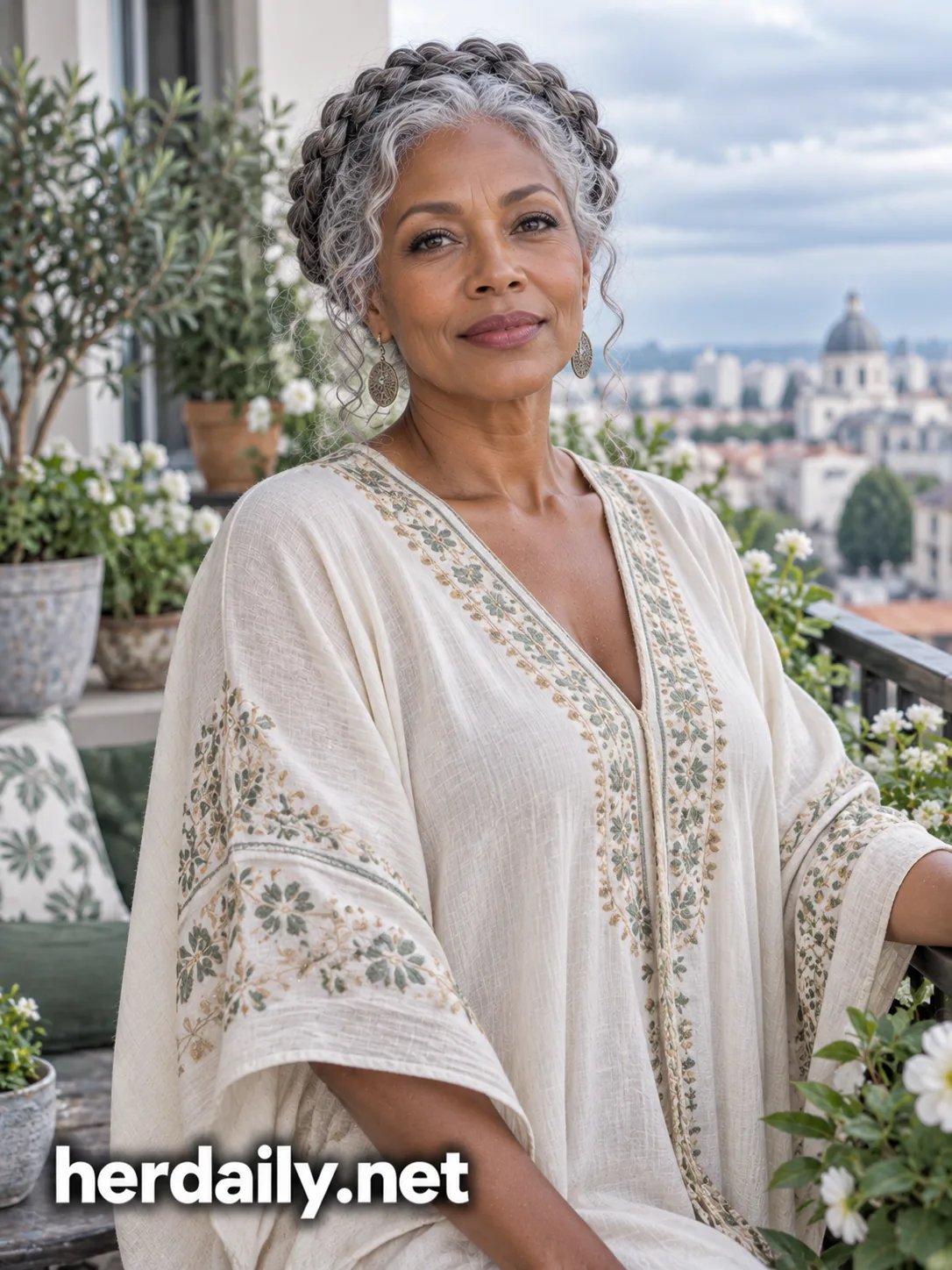
Finally, don’t count your gray out of special-occasion styling. A soft, textured updo with a few face-framing pieces left loose looks every bit as elegant as it ever did with your natural pigment — maybe more so.
How to Care for Natural Gray Hair (At Any Age)
Gray hair isn’t just a different color — it’s a different hair type. Once melanin production slows, strands often become coarser, drier, and more porous, which is why gray hair can look dull or take on a yellow, brassy cast if it isn’t cared for properly.
My non-negotiables for every client with natural gray: a purple or blue-toned shampoo once a week to cancel brassiness, a deeply hydrating conditioner or mask on every wash day, and a silk or satin pillowcase to cut down on friction and frizz overnight. Heat styling should be kept to a minimum, and always with a heat protectant, since gray strands are more fragile than pigmented ones.
Care needs shift a bit by decade, too. In your 40s, if you’re only partially gray, a color-depositing shampoo can help blend the two tones. In your 50s, texture often turns coarser and wirier, so richer, oil-based conditioners work wonders. By your 60s and beyond, hair typically thins, so I recommend lightweight, sulfate-free volumizing formulas rather than heavy creams that can weigh strands down.
One tip that surprises people: gray hair needs sun protection, too. Chlorine, salt water, and UV rays all oxidize gray strands faster than pigmented ones, which is often the real culprit behind a summer of swimming turning silver hair a dull, straw-like yellow. A leave-in spray with UV filters, or simply a hat by the pool, goes a long way.
Coloring & Toning Options If You’re Not Fully Gray Yet
Not everyone is ready to go 100% natural overnight, and that’s completely fine. If you’re transitioning, ask your colorist about a “gray blending” service — lowlights and highlights placed to soften the line between your natural gray and your previous color, so the grow-out looks intentional rather than patchy.
If you’re fully gray but want to fine-tune the tone, a purple or blue gloss (applied in-salon or with an at-home toning shampoo) can shift brassy, yellow-toned gray toward a cooler, brighter silver. Prefer warmth instead? A very subtle golden gloss keeps white hair from looking flat or clinical.
For the weeks between color appointments, a root touch-up powder or spray in a shade close to your natural gray can disguise new growth at the part line, especially useful if you have darker roots growing in against lighter, blended lengths.
And if you simply love color for color’s sake, plenty of women choose to keep a few fun panels — a soft lavender, a rose-gold face-framing piece — layered over their natural gray base, proving that “going gray” and “having fun with color” aren’t mutually exclusive.
Which Gray Hairstyle Suits Your Face Shape?
If you’re not sure which face shape you have, a quick trick is to trace your reflection on a bathroom mirror with a dry-erase marker, then step back and compare the outline to a circle, square, oval, or heart. From there, it’s much easier to see which of the 30 styles above will actually work with your features rather than against them.
Round faces: look for height at the crown and length past the chin — a pixie with lift (like the soft layered pixie above) or long layers both add the vertical line a round face benefits from.
Square or angular faces: soft, side-swept bangs and rounded layers, rather than a blunt, sharp bob, help ease strong jawlines.
Oval faces: congratulations — you can wear almost anything on this list, from a cropped pixie to a long wavy lob, and it will suit you.
Heart-shaped faces: a chin-length bob or lob balances a narrower jaw and a wider forehead beautifully.
And if you wear glasses, frame placement matters just as much as the haircut itself. For more specific guidance, my full guide to hairstyles for women over 70 with glasses covers exactly how to coordinate frames with your cut, whatever your age.
Frequently Asked Questions About Natural Gray Hair Over 50
At what age does hair typically start turning gray?
Genetics play the biggest role, but most women see their first grays sometime between their mid-30s and mid-40s, with a fuller transition often complete by the mid-50s. Stress, smoking, and certain vitamin deficiencies can speed the process along, but the overall timeline is largely inherited.
How do I stop my gray hair from looking yellow?
Yellowing, often called “brassiness,” comes from mineral buildup, product residue, or UV exposure oxidizing the hair shaft. A purple or blue shampoo used once or twice a week, along with a UV-protectant spray, is usually enough to keep gray hair looking bright and cool-toned rather than dingy.
Is short hair mandatory once you go gray?
Not at all — several looks on this list, including the long layered waves and the long wavy center-part style, prove gray hair can be worn just as long as pigmented hair. The key is regular trims to prevent dryness and split ends, which tend to show up more visibly in lighter hair.
What haircut hides thinning hair best?
Layered cuts, especially feathered or angled layers, create the illusion of volume far better than one-length styles. A slightly shorter overall length also helps, since long, heavy hair can pull down and flatten at the roots.
Do hairstyle needs change again after 60 or 70?
They can — hair often becomes finer and grows more slowly, so many women shift toward shorter, lower-maintenance cuts with built-in volume. If you’re planning ahead for that stage, my dedicated post on hairstyles for women over 70 has more decade-specific guidance.
How often should I get my gray hair trimmed?
I recommend every 8–10 weeks for most cuts on this list, though blunt bobs and precise pixies may need a touch-up closer to the 6-week mark to keep their shape crisp.
What products should be in every gray-haired woman’s shower?
At minimum: a violet or blue-toned shampoo to control brassiness, a rich weekly hair mask to combat dryness, and a lightweight leave-in with UV protection. If your hair has thinned, add a gentle volumizing mousse at the roots before you blow-dry.
Final Thoughts: Your Gray, Your Confidence
Gray hair was never the problem — the wrong cut for it was. Whichever of these 30 styles caught your eye, bring a photo (or several) to your next salon visit and talk through what will actually work for your texture, thickness, and face shape.
Loved this roundup? Save your favorite look to Pinterest right now so you don’t lose it in the scroll — and come back to herdaily.net any time you need more gray hair inspiration.
76 views

Leave a Reply