I’ve spent more than twenty years styling and writing about braids, and flip-over fulani braids have quickly become one of my favorite protective styles to recommend to women over 40. This chic variation on the classic fulani braid folds the front section back over the crown, creating instant volume, a face-framing finish, and a polished look that holds up beautifully whether your hair is thick, fine, gray, or color-treated. It’s also wonderfully practical: once installed, you can wash your face, work out, and sleep without worrying about your hair for weeks at a time, which is exactly the kind of low-fuss elegance I look for in a style after 40. Before you keep scrolling, go ahead and save this hairstyles collection to your Pinterest board so you can find it again when you’re ready to book your next appointment. Below, I’m walking you through twenty of my favorite flip-over fulani braids looks, along with care tips, color ideas, and a face-shape guide built specifically with women in their 40s, 50s, and 60s and beyond in mind.
Classic Flip-Over Fulani Braids
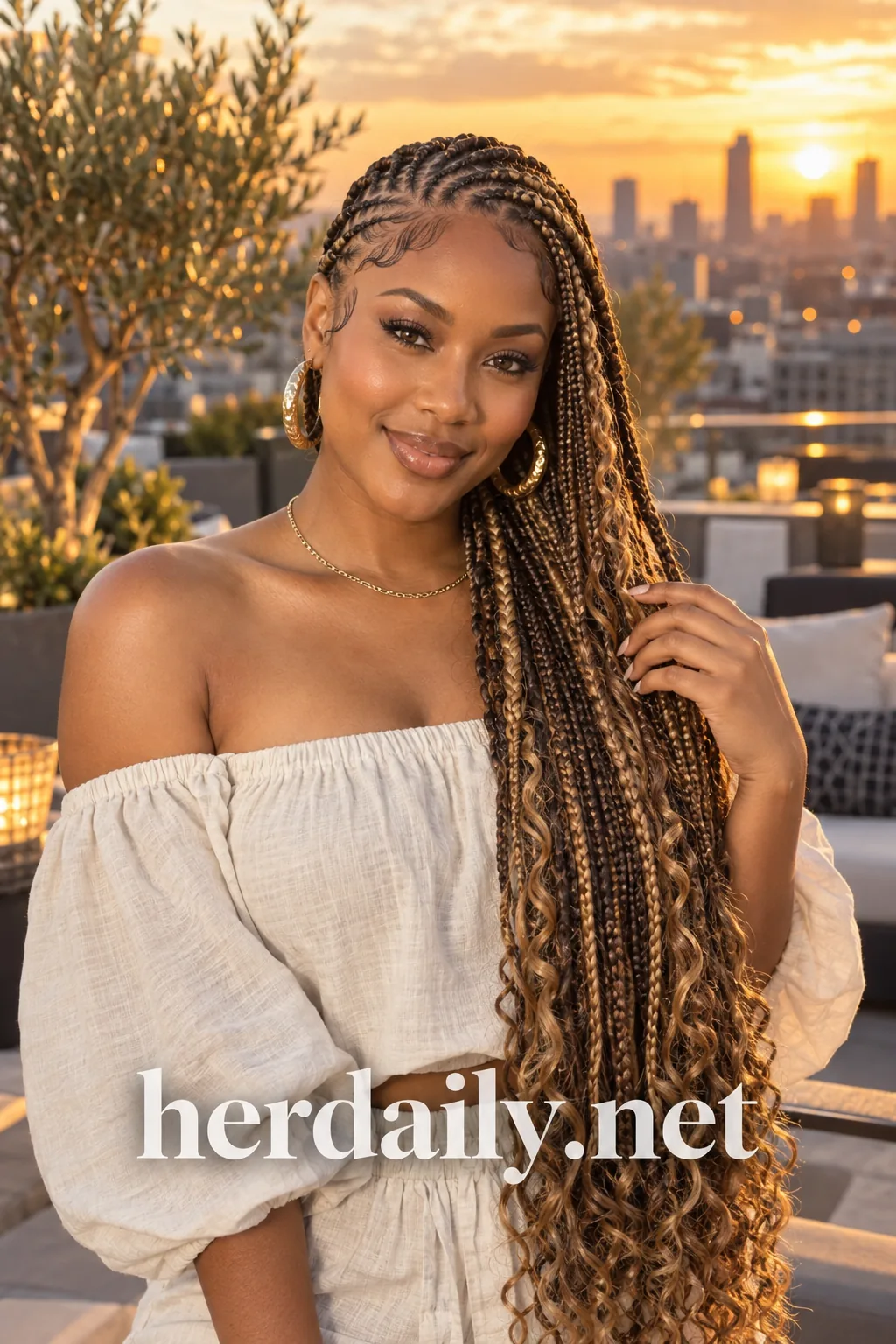
This is the look that started it all for me. A simple flip at the front, smooth cornrow-style braids sweeping back, and clean, defined parts. It’s the easiest version to ask for at the salon and the most forgiving if this is your first time trying fulani braids.
Flip-Over Fulani Braids with Beaded Ends
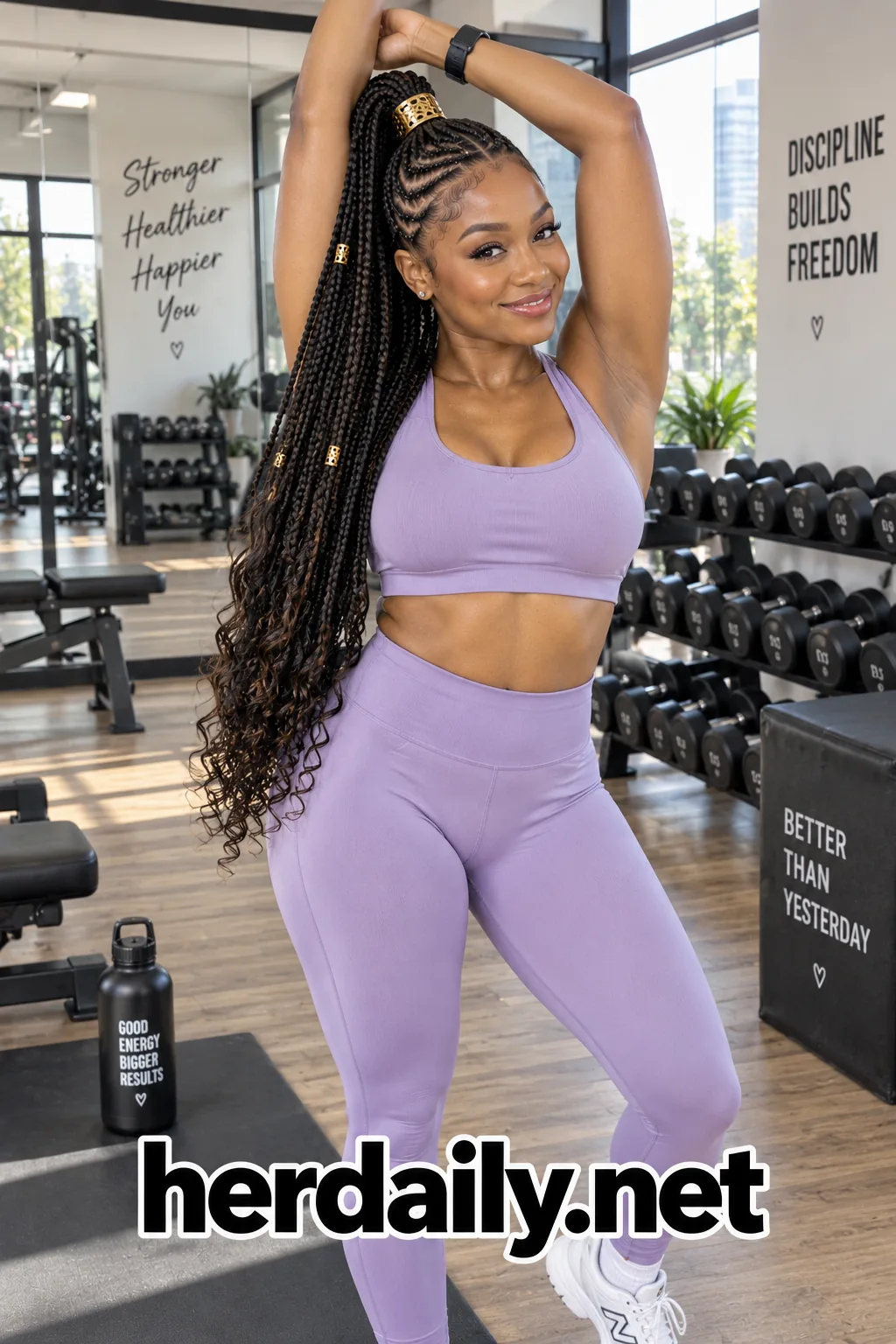
Adding beads to the braid ends brings movement and a little sound and sparkle every time you turn your head. I love this option for women who want their braids to feel festive without going over the top — choose two or three coordinating bead colors so it still reads elegant rather than costume-y.
Side-Parted Flip-Over Fulani Braids

Shifting the part to one side softens the whole style and is genuinely one of the most flattering tweaks you can make after 40. A deep side part draws the eye diagonally across the face, which tends to be more forgiving than a hard center part as our features mature.
Flip-Over Fulani Braids with a Low Bun

Gathering the braids into a low, loose bun at the nape is polished enough for the office yet relaxed enough for a weekend brunch. This is one of my go-to suggestions for clients who want fulani braids but still want an “updo” option for special occasions.
Chunky Flip-Over Fulani Braids
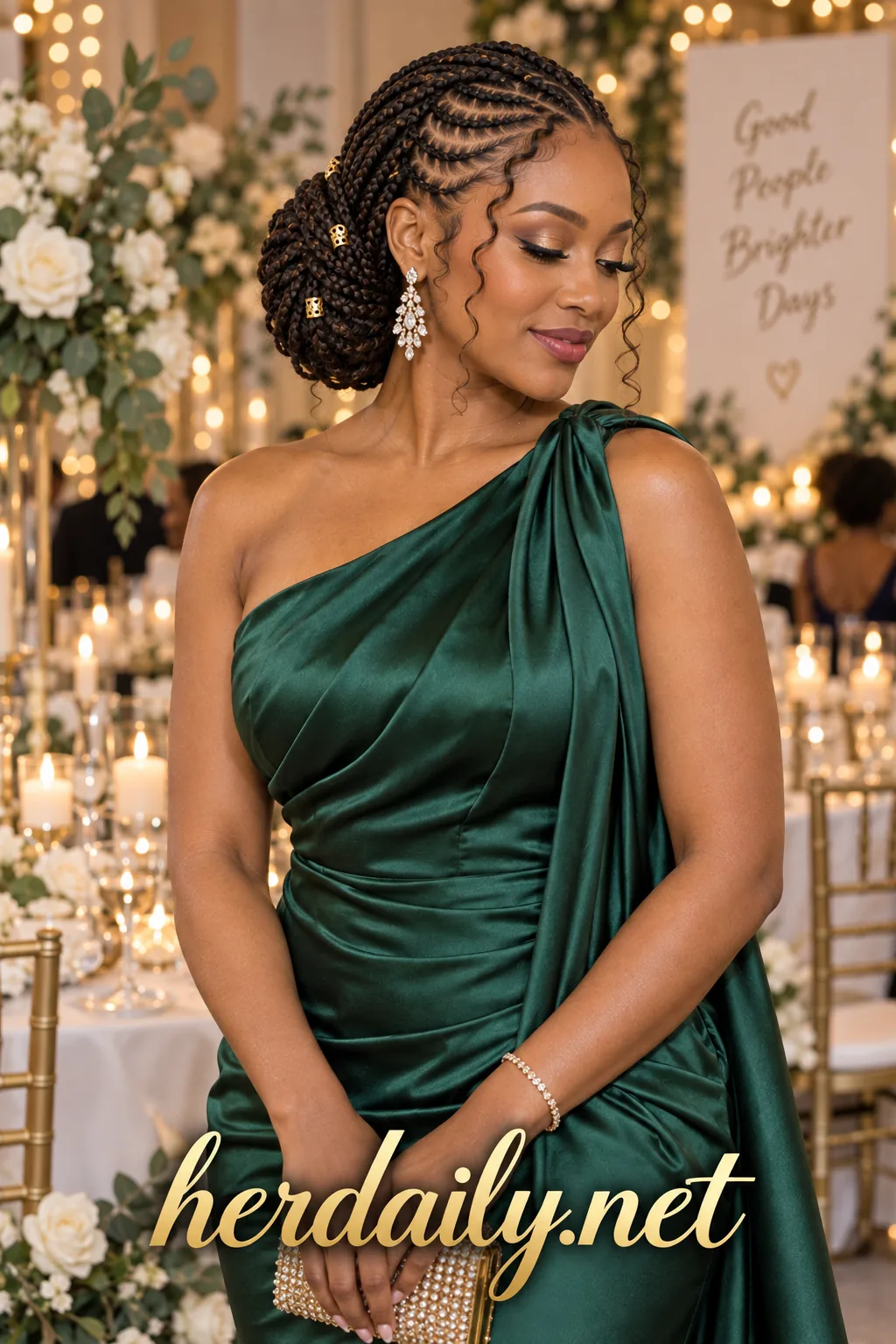
Larger, thicker braids mean fewer individual braids, which translates to a shorter time in the chair and less tension on your scalp — something I always flag for women managing thinning edges or a sensitive scalp. The bold texture also photographs beautifully.
Flip-Over Fulani Braids with Gold Rings

Slide a few gold cuffs or rings onto select braids for a subtle, elevated accent. I recommend this style to women who want jewelry-level polish without adding a single extra minute to their morning routine, since the rings stay put for weeks.
Half-Up Flip-Over Fulani Braids
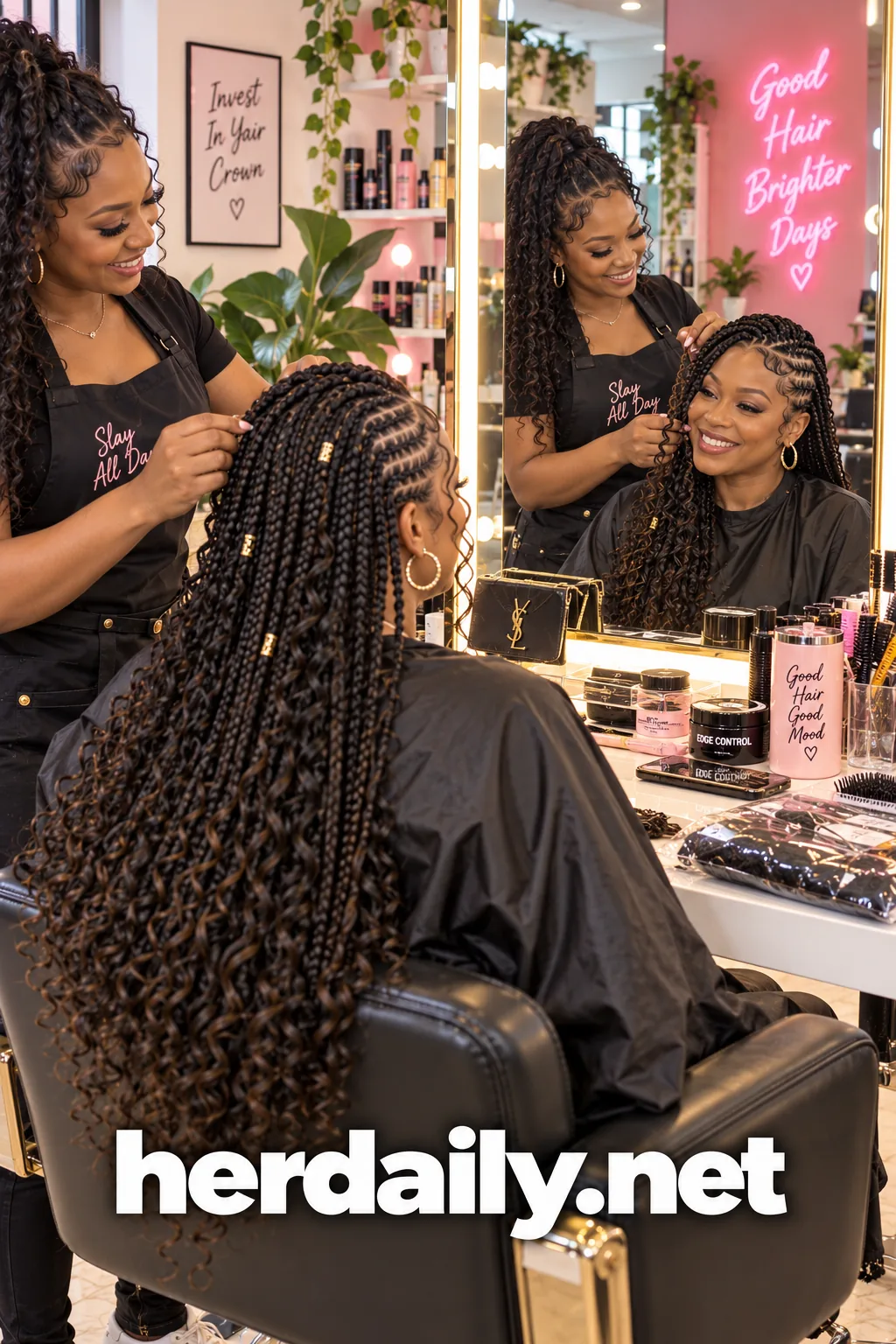
Pulling just the top section up and back keeps the flip-over detail as the star while leaving the rest of your length loose and swingy. It’s a versatile middle ground for anyone not ready to commit to a fully braided look.
Flip-Over Fulani Braids with Curly Ends

Leaving the braid ends naturally curly or adding curled extensions softens the geometry of the braids and gives the whole style a more romantic, lived-in finish. This is a favorite of mine for women who find sleek, straight ends a bit too severe for their face.
Flip-Over Fulani Braids with a Center Part
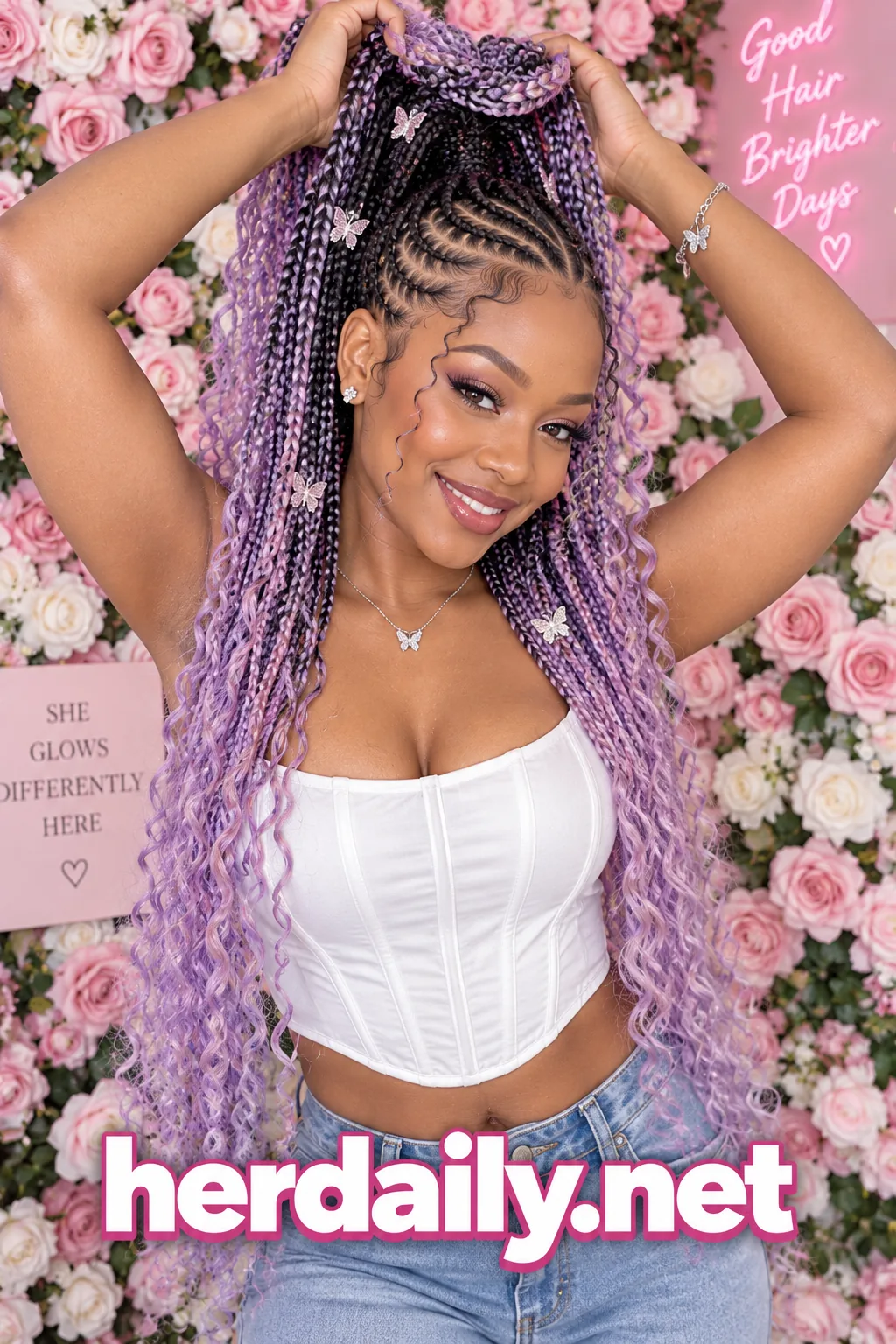
A crisp center part keeps this style symmetrical and graphic, which I find works especially well on oval and heart-shaped faces. It’s also the easiest part pattern to maintain between salon visits since new growth is less noticeable along a straight center line.
Flip-Over Fulani Braids with Edges Laid

A gently laid edge along the hairline adds definition without looking overly done, and a light-hold gel is all you need to maintain it. I always tell clients over 50 to keep edge styling minimal, since a heavier hand can stress already-thinning hairline hair.
Flip-Over Fulani Braids for Fine, Thinning Hair
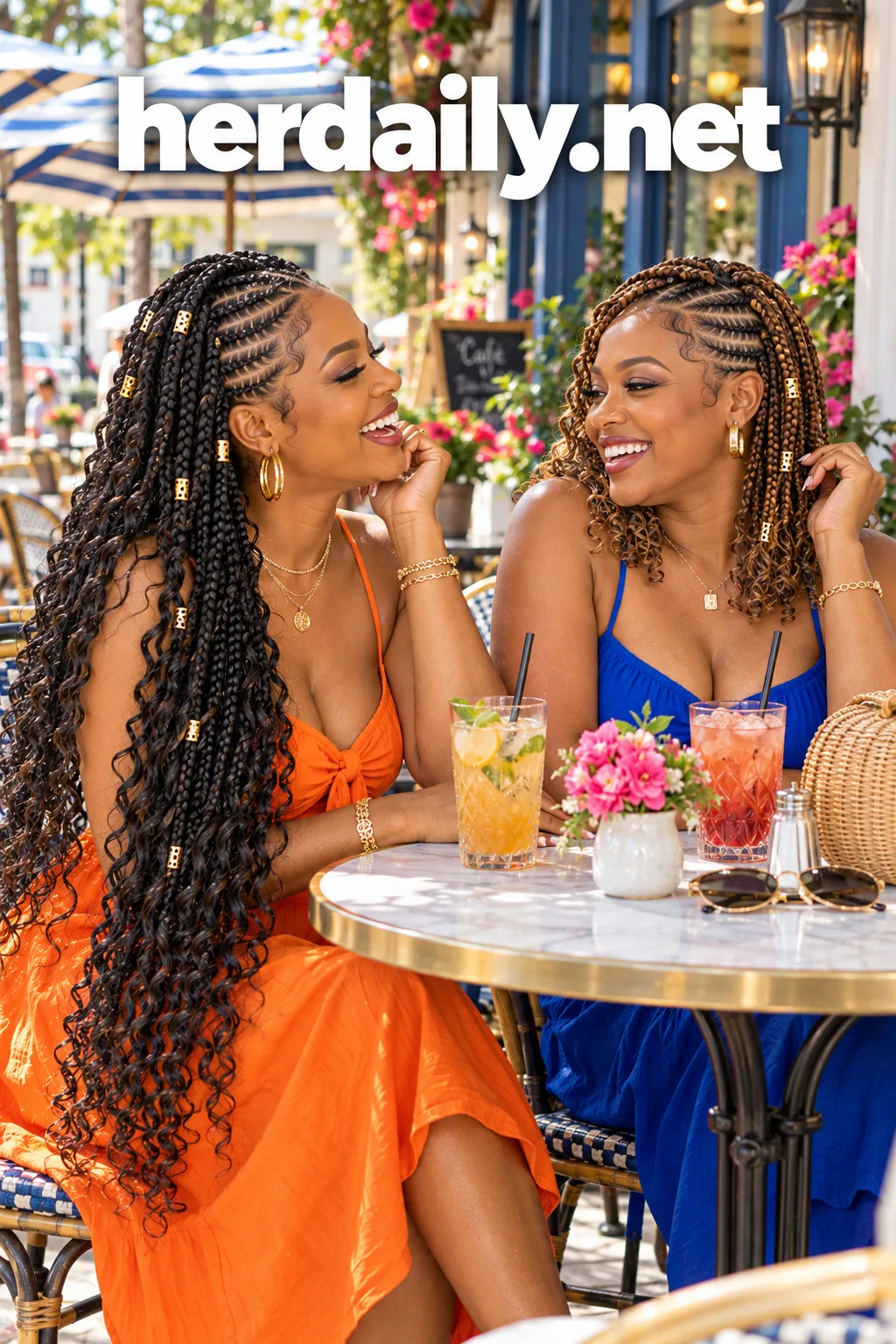
If your hair has thinned with age — which is extremely common and nothing to be self-conscious about — ask your stylist for smaller, lighter braids and a longer break between installs. This version keeps tension low while still giving you the full flip-over silhouette.
Flip-Over Fulani Braids with a Front Braid Crown
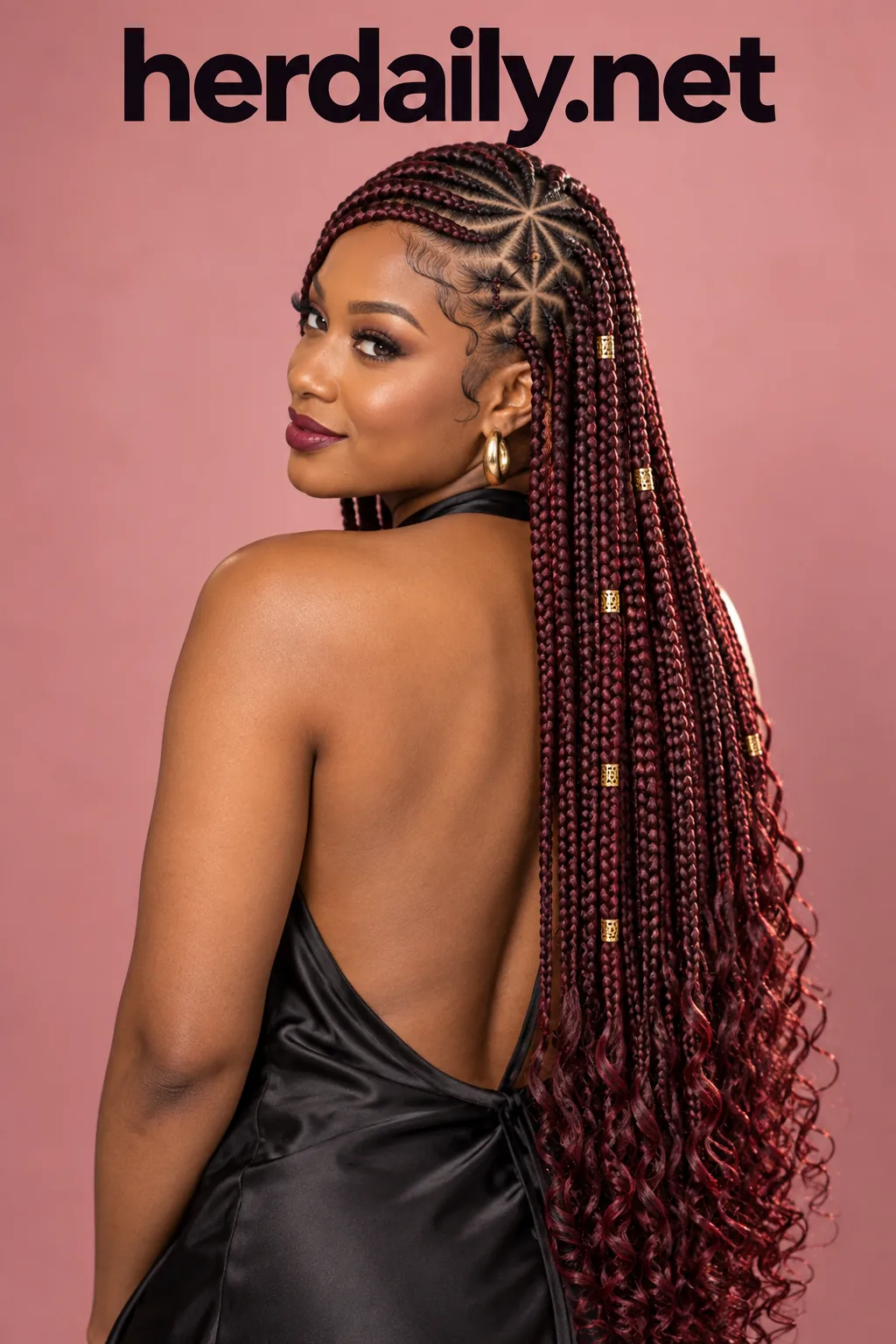
This variation wraps a braided “crown” across the front hairline before the flip, adding structure and a slightly regal finish. It’s one of the prettiest options for weddings, anniversaries, or any event where you want your hair to feel a little more formal.
Flip-Over Fulani Braids with Loose Face-Framing Tendrils
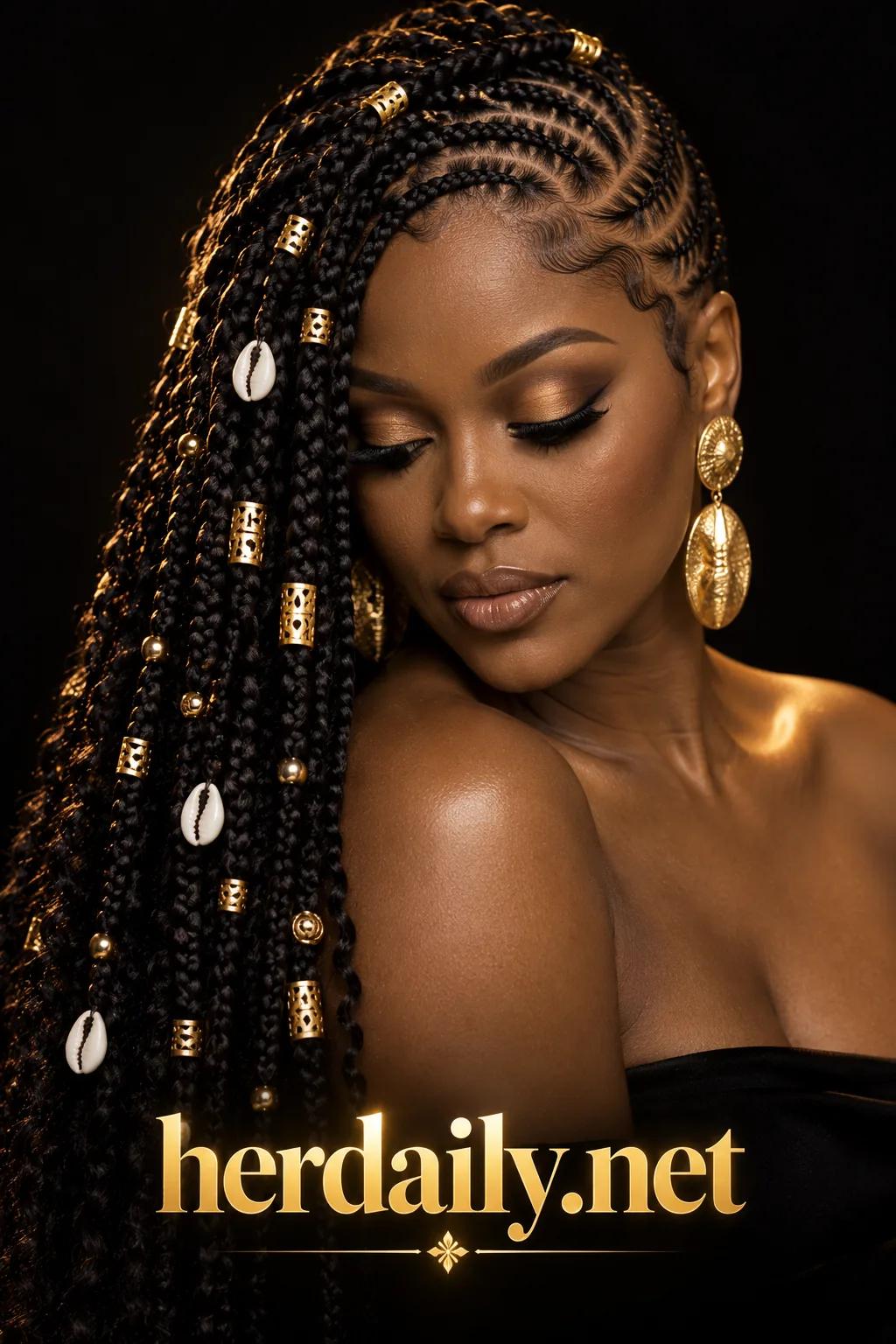
Leaving a few soft tendrils out around the face takes the edge off a very structured braid style and tends to be universally flattering. I especially recommend this for round or square faces, since the loose pieces add gentle vertical movement.
Flip-Over Fulani Braids with a High Ponytail

Gathering the braids into a high ponytail gives you an instant lift and a youthful, energetic feel — perfect for workouts, travel days, or anytime you want your hair fully off your neck. It also happens to be one of the coolest options for hot climates.
Flip-Over Fulani Braids with Colored Ends
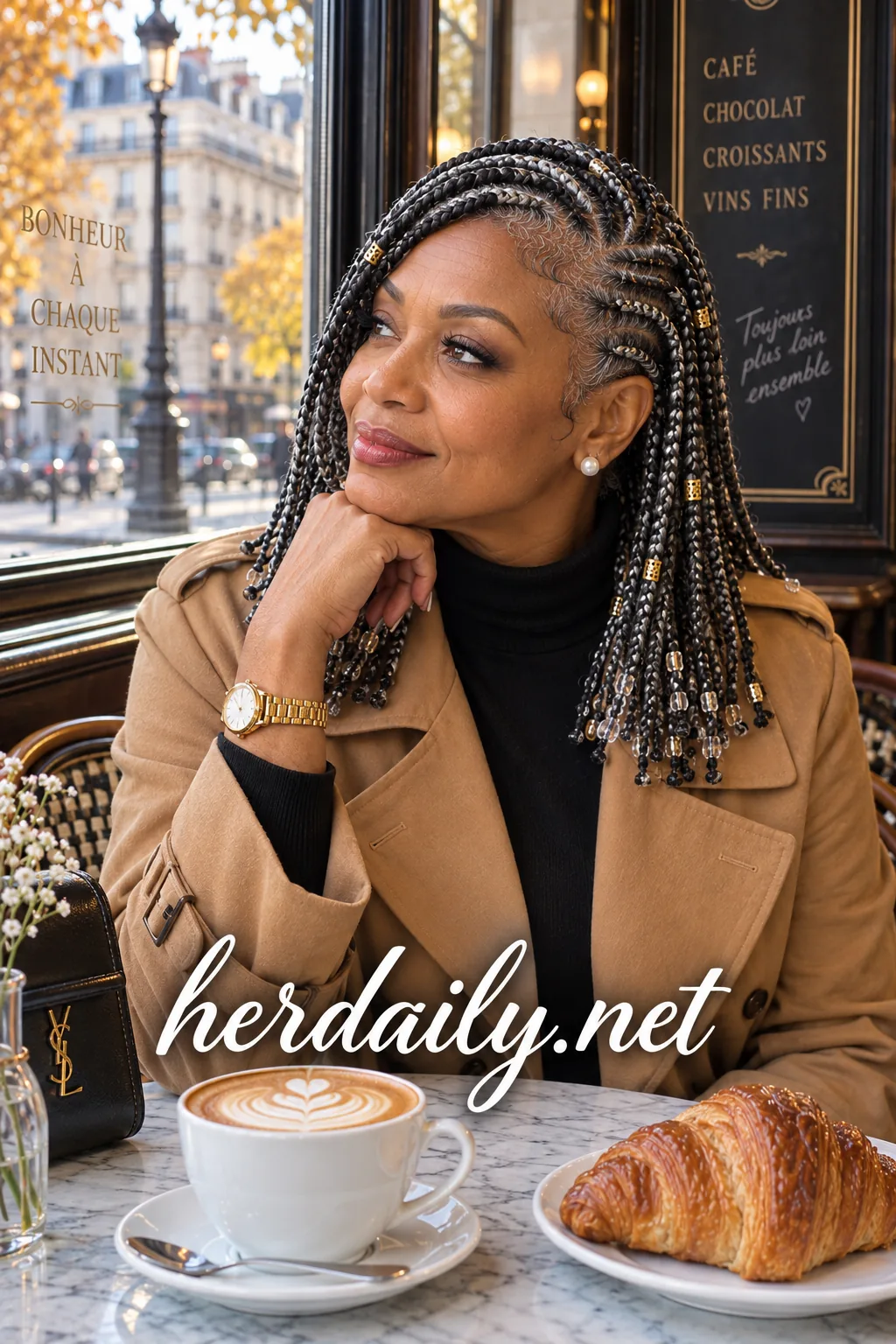
A subtle ombré or dip-dye on the braid ends is a low-commitment way to experiment with color without touching your natural hair or gray. Warm caramel and soft honey tones tend to be the most universally flattering against mature skin.
Flip-Over Fulani Braids with Cowrie Shell Accents

Cowrie shells threaded onto a few braids add texture, cultural richness, and a beautiful handmade quality to the style. I love recommending this for women who want their braids to feel a little more personal and artisanal rather than uniform.
Flip-Over Fulani Braids with a Deep Side Part

An exaggerated side part paired with the flip-over front creates real drama and asymmetry. This is a bolder styling choice I often suggest to clients in their 40s who want their braids to feel fashion-forward rather than purely practical.
Flip-Over Fulani Braids with a Wrapped Base

Wrapping the base of the flipped section with a thin strand of hair or thread hides the foundation and gives the style a seamless, professional finish. It takes a stylist only a few extra minutes and makes a noticeable difference in how polished the front looks.
Flip-Over Fulani Braids for Fine Edges
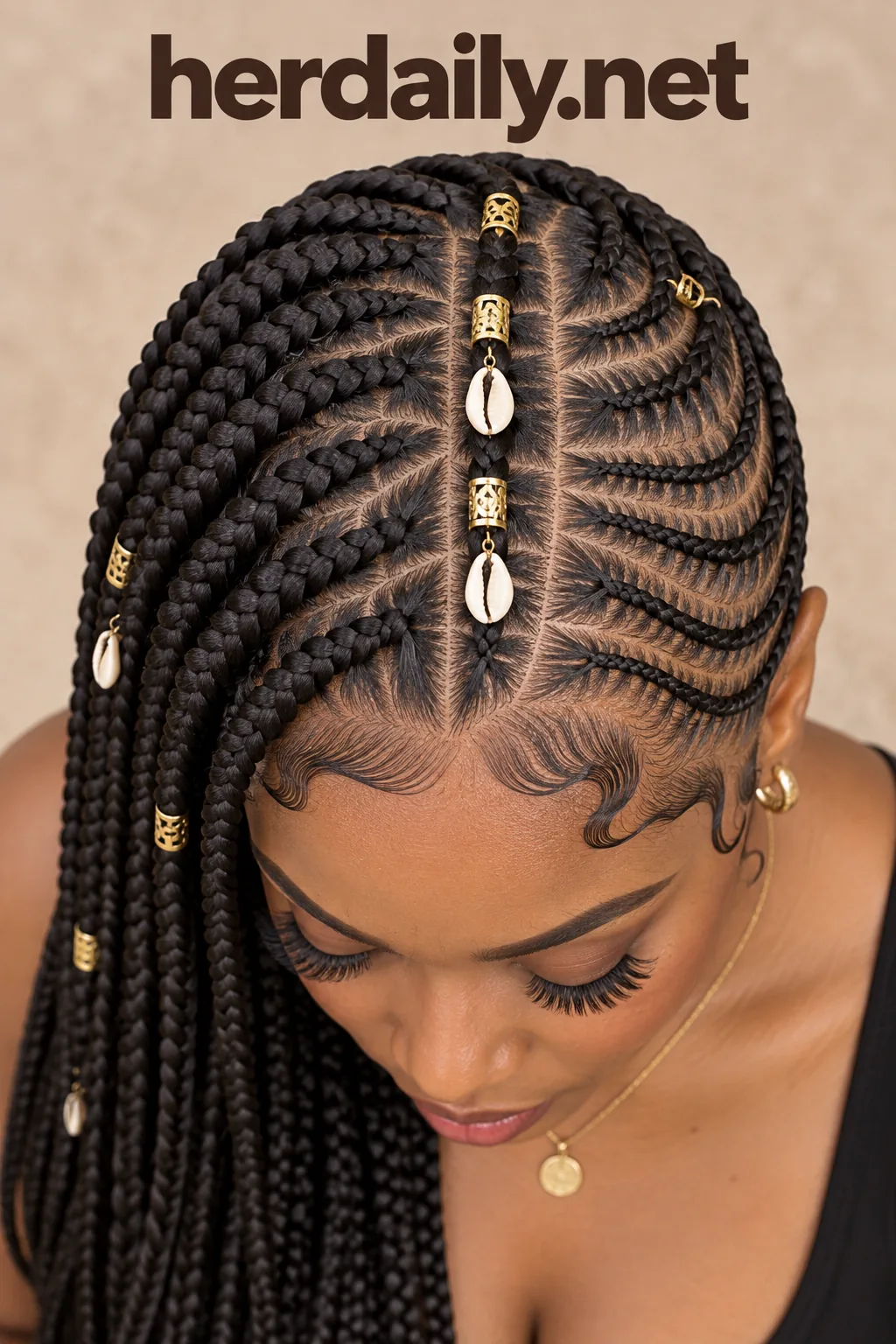
For hairlines that have thinned over the years, ask your stylist to start the flip a little further back from the hairline and to avoid excessive tension at the temples. This small adjustment protects fragile edge hair while still delivering the full flip-over effect.
Flip-Over Fulani Braids for Special Occasions
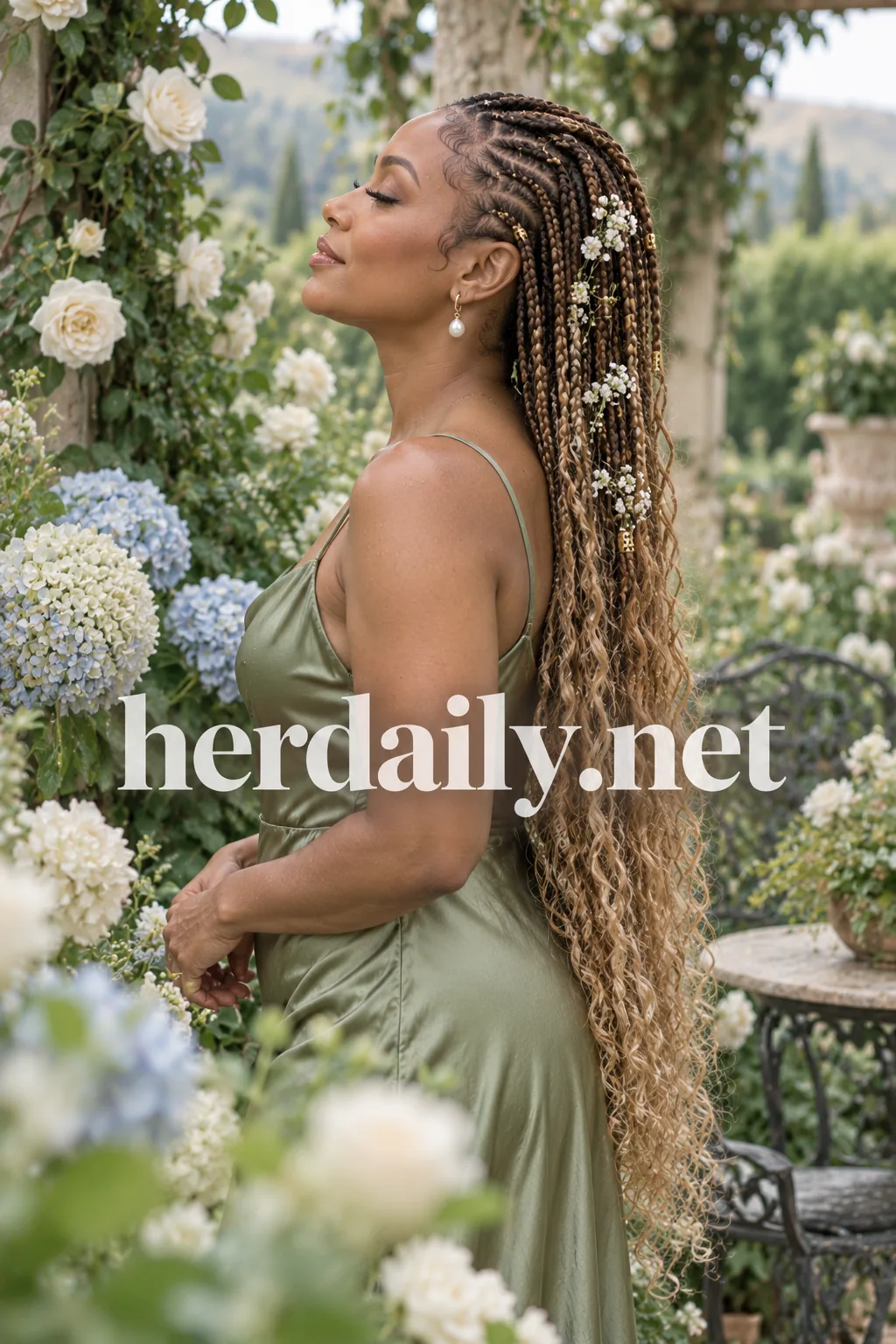
Dressed up with a few extra pins, a sleek bun, and maybe a little shine spray, this style moves easily from everyday wear to a wedding, holiday party, or milestone birthday. It’s proof that a protective style can absolutely double as your special-occasion hair.
Caring for Your Flip-Over Fulani Braids
Braids are only as beautiful as the hair underneath them, so I always tell clients to treat their scalp gently for the full life of the style. Cleanse with a diluted shampoo every one to two weeks using a spray bottle or applicator, moisturize your scalp with a light oil two or three times a week, and sleep on a satin or silk pillowcase to cut down on frizz and friction. Most flip-over fulani braids last four to eight weeks depending on your hair growth and how gently you maintain them, and I recommend giving your natural hair at least a week or two of rest between installs. Pay close attention to any tightness, tingling, or soreness in the first 48 hours — that’s your cue to loosen a section rather than push through discomfort, especially as our skin and scalps become more sensitive with age. It’s also worth trimming any single-strand knots or split ends before your braids go in, since damaged hair under tension is far more likely to break. If the upkeep ever starts to feel like too much, a low-maintenance cut like one of these short shaggy haircuts is a lovely style to rotate in between braided sessions.
Color Options for Flip-Over Fulani Braids Over 40
Color is where you can really make this style your own. Jet black and deep espresso remain the most classic choices and blend seamlessly with natural gray at the roots for a soft, gradual transition. If you’re craving something warmer, caramel, honey blonde, and copper all photograph beautifully against mature skin tones and add dimension without looking harsh, especially under natural light. For clients who are fully embracing their silver hair, I often suggest a salt-and-pepper braiding hair blend so the braids read as an extension of your natural color rather than a wig-like contrast. Burgundy and deep plum are two of my favorite unexpected choices for women over 50 who want a little richness without straying too far from a natural palette, and they tend to complement warmer skin undertones beautifully. Whatever shade you choose, ask your stylist to blend at least two tones of braiding hair rather than one flat color — it makes even synthetic hair look remarkably natural. And if you ever want a change of texture rather than color, styles like these layered haircuts over 50 offer a similarly soft, face-framing effect once your braids come out.
Choosing Flip-Over Fulani Braids for Your Face Shape
Round faces tend to look best with a deep side part and some length past the shoulders, which elongates the face rather than widening it. Square and heart-shaped faces are beautifully balanced by loose face-framing tendrils or soft curled ends that soften strong jawlines and wider foreheads. Oval faces are the most versatile and can wear almost any variation on this list, from a crisp center part to a fully swept-back style. Diamond faces, with their narrower forehead and chin and wider cheekbones, look wonderful with a half-up style that adds volume right at the temples and balances out the cheekbone width. And if you have a longer or narrower face, a chunkier braid pattern with more volume at the crown, similar to what you’d find among these long hairstyles over 40, adds welcome width and balance. When in doubt, bring a few reference photos to your consultation and ask your stylist to adjust the part placement and braid thickness to your specific bone structure rather than copying a photo exactly.
Flip-Over Fulani Braids Through Every Decade
In your 40s, this is a wonderful moment to experiment boldly — try beads, gold rings, or a dramatic deep side part, since your hair is often still thick and resilient enough to handle more elaborate detailing. This is also a great time to play with bolder color, since braiding hair covers so much of your natural strands that you can test a warm caramel or copper without any real commitment. In your 50s, I usually recommend simplifying slightly: a clean part, moderate braid size, and a gentle, well-laid edge tend to look the most current and require the least daily fuss, and a classic hairstyle for over 50 like this pairs beautifully with a braided regrowth phase. Many women in this decade are also managing perimenopausal changes in hair texture and density, so I always encourage a slightly looser install and a longer break between sessions than you may have needed in your 30s. In your 60s and beyond, prioritize comfort and scalp health above all else: ask for smaller sections, lighter tension, and a longer rest period between installs, and don’t be afraid to keep the length shorter for easier daily management, much like many of these hairstyles for women over 70. A shorter, lighter braid also tends to be easier on the neck and shoulders during the install itself, which matters more than people realize once you’re sitting in a chair for several hours. At every age, the goal is the same — a style that makes you feel like yourself, only a little more put together.
Frequently Asked Questions
How long do flip-over fulani braids last?
Most women get four to eight weeks out of this style, depending on how fast your hair grows and how well you maintain your scalp and edges in between. Pushing much past eight weeks tends to lead to more matting and tangling than is worth the extra time saved.
Are flip-over fulani braids good for thinning hair?
Yes, as long as your stylist uses smaller sections, lighter tension, and avoids over-braiding the hairline. Chunkier braids and a longer rest period between installs also help protect fragile hair, and it’s worth being upfront with your stylist about any areas of concern before they begin.
Can I get flip-over fulani braids with gray hair?
Absolutely. Many of my clients over 50 choose a salt-and-pepper braiding hair blend that mimics their natural gray, or they lean into full silver braiding hair for a striking, low-maintenance look. Either option tends to look far more natural than trying to match a single solid color.
How do I keep my scalp from itching under braids?
Use a lightweight scalp oil or soothing spray two to three times a week, avoid heavy products that can build up, and cleanse with a diluted shampoo every one to two weeks rather than letting product accumulate. Persistent itching or soreness beyond the first few days is a sign the braids may be too tight and should be loosened.
What’s the difference between fulani braids and flip-over fulani braids?
Traditional fulani braids typically feature a center braid running front to back with braids fanning out to the sides. The flip-over version adds a distinct folded front section for extra volume and a more sculptural, face-framing finish, which many women find more flattering as hairlines and hair density change with age.
Can I sleep comfortably in flip-over fulani braids?
Yes, most women find them very comfortable once the initial tension eases after a day or two. A satin bonnet or pillowcase will protect the style and help it last longer while also protecting your natural hair from friction overnight.
How much does it typically cost to get flip-over fulani braids done?
Pricing varies widely by region, braid size, and length, but this style generally falls in a similar range to other medium-to-large cornrow-based protective styles. I always recommend asking for a clear price quote based on your desired size and length before booking.
Final Thoughts
Flip-over fulani braids are one of those rare styles that manage to be both low-maintenance and genuinely glamorous, which is exactly why I keep recommending them to women in every decade past 40. Whether you go classic and simple or dress things up with beads, rings, or shells, there’s a version on this list that will suit your hair, your face shape, and your lifestyle. What I love most about this style is how it grows with you — the same basic technique can be dressed up for a wedding in your 40s, simplified for easy weekday wear in your 50s, and scaled back gently for comfort in your 60s and beyond, all without ever losing that signature flip-over polish. Now save your favorite look to Pinterest so you have it ready to show your stylist, and don’t forget to pin this whole collection so you can revisit it whenever you’re ready for your next braid appointment.
1 views


Leave a Reply